MEDTRONIC INTERSTIM
Strengthen provider-patient communication
efficiently and easily.
Brief:
Medtronic’s Sacral Neuromodulation implant—called InterStim—was a fairly simple procedure that could result in major quality-of-life impacts for patients with bladder and bowel control problems. Post-op, patients did need to follow certain steps, watch for negative symptoms, or make adjustments to their device. While important, these follow-up communications took valuable time away from doctors and reduced the number of patients they could treat.
Execution:
We built a communications strategy that took into account patient personas and preferred channels to build out an efficient system for follow-ups. We then rewrote the cold, jargon-filled scripts, SMS messages, and emails with a human-centered focus to both engage patients and encourage them on their recovery.
To start we needed to understand SNM patients. We identified four personas, and used intake surveys from patients, providers, and phone support to assign a persona to each patient through their journey. Their responses to surveys and communications could shift their persona throughout the process.
Patient Personas
Normalizer
”This is just part of aging, eventually I’ll get used to it.”
Self Advocate
”I know how I feel and I’m not afraid to question my doctor.”
Doctor-Dependent
”If my doctor doesn’t ask, it must not be important.”
Giving Up/Given Up
”It doesn’t matter what I do,
there’s no way to improve it.”
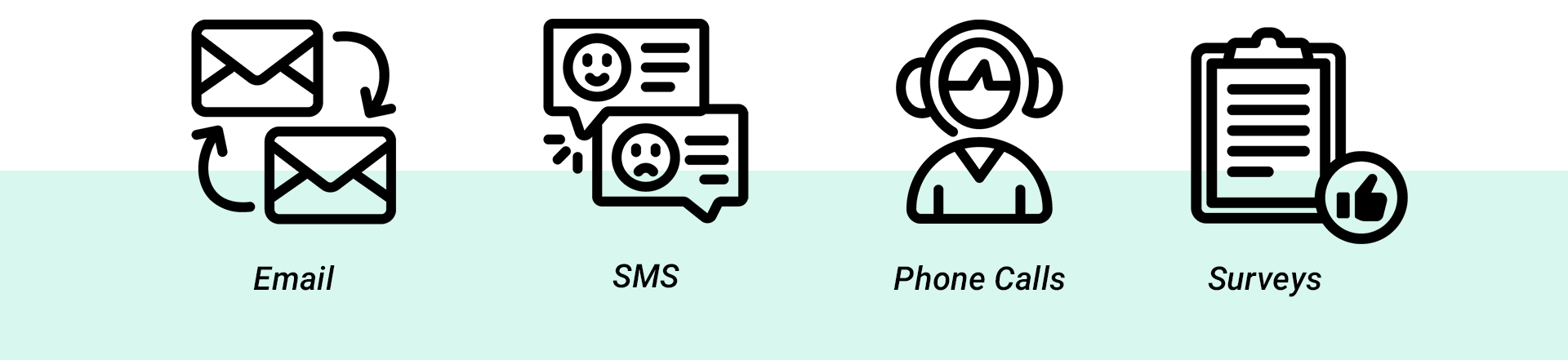
Next, we established a communications strategy that would meet patients where they are.
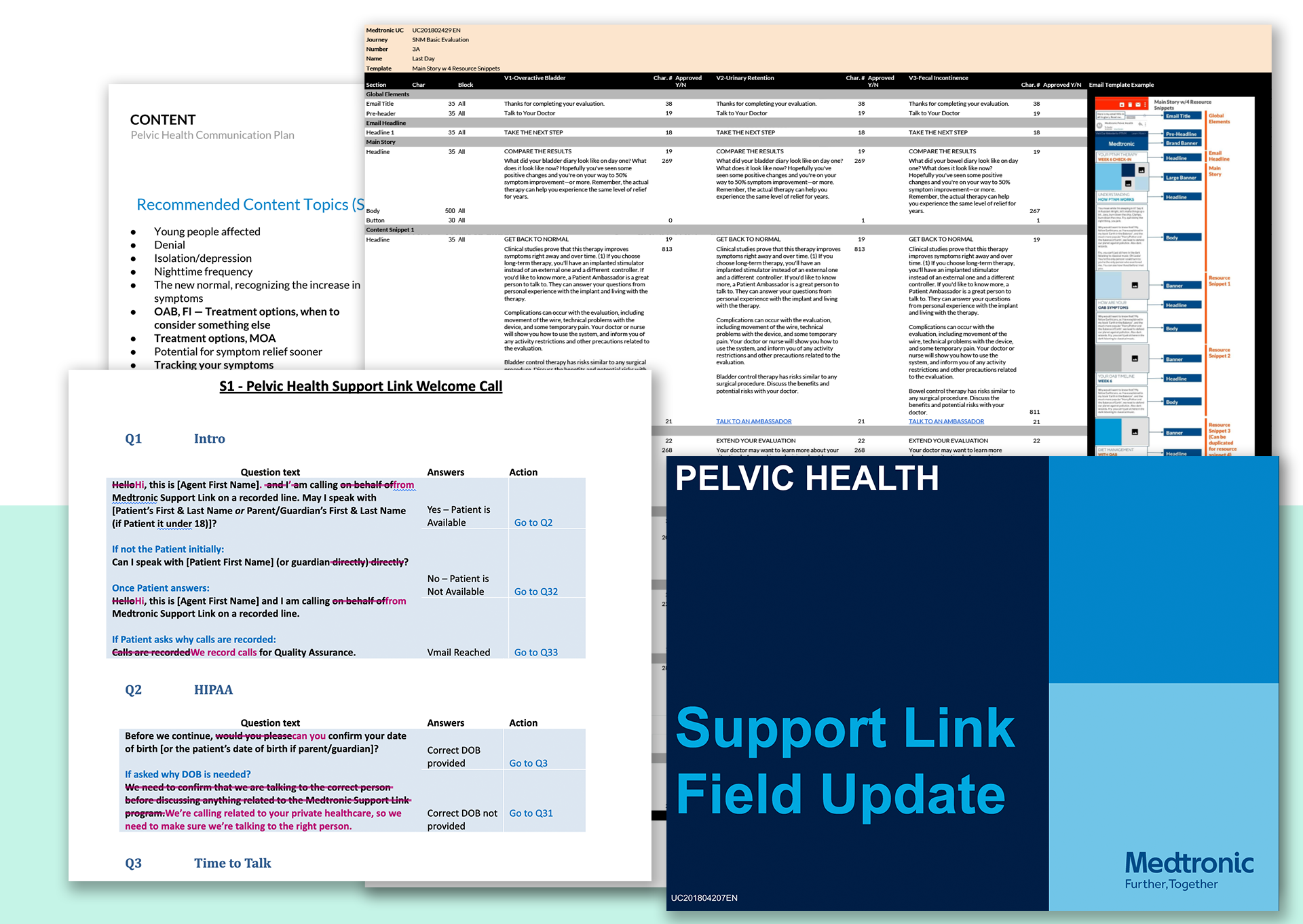
Starting from previous call scripts, patient materials, and provider feedback, I wrote new content and scripts for every part of the communications plan.
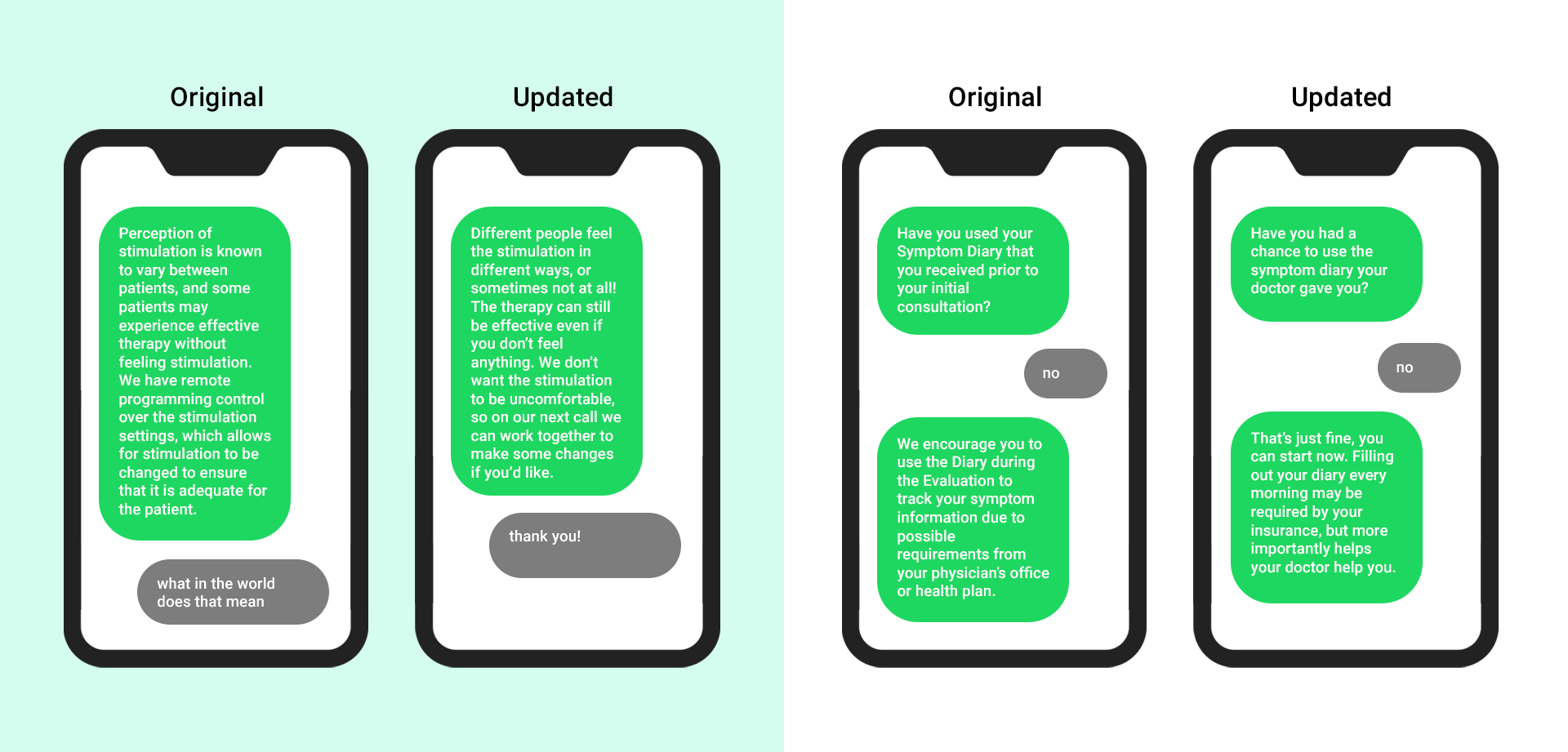
And then I kept writing, finishing with well over 100 scripts, emails, and SMS trees. The program continued after this initial push, using collected data and feedback to tweak and keep a patient-focused approach.
Credit to Nursila at Noun Projects for the icons.